
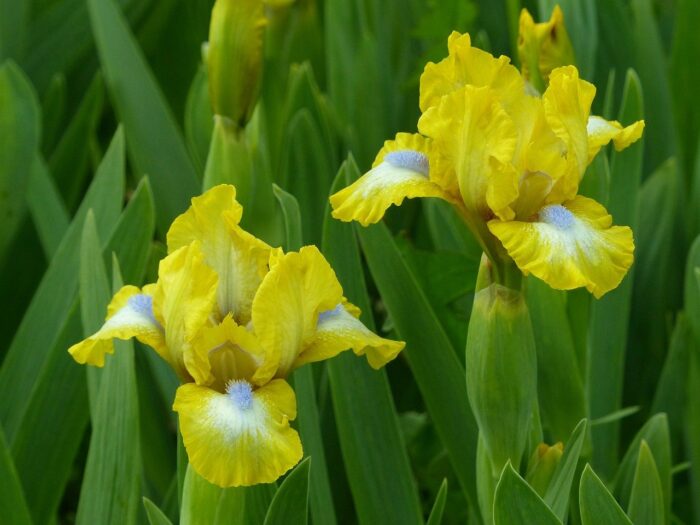
by Jennifer Poindexter
Are you looking for perennials to grow around your home in designated garden beds? The iris flower deserves your attention.
This amazing flower is forgiving, easy-to-grow, and produces a gorgeous array of colors. Iris flowers provide a bonus because they can be divided to create even more plants, giving you the most bang for your buck.
Does adding color, growing an easy flower, and saving money on landscaping sound amazing to you? Then let’s discuss how you can accomplish this around your home by growing irises.
Growing Conditions for Irises
Iris flowers aren’t fussy in the slightest. In fact, they have only a few basic needs to grow gloriously around your home.
As with many plants, they require well-draining soil. If your flower bed is in a low-lying area that frequently has standing water, this isn’t where you want to plant these flowers.
Place them where water drains away from them to avoid the plant rotting at its base. It’s also important the flowers are planted where they receive a minimum of six hours of full sun per day.
Again, this has to do with moisture. If they’re planted where they receive adequate sunlight, it not only encourages blooms, but it also ensures the plant stays dry.
Iris flowers have their blooms and foliage, but they also have a rhizome at the base of the plant which leads to its roots.
The rhizome can be seen at soil level and is known for rotting if it receives too much moisture. Therefore, keeping it dry will give your plant the greatest chance of survival.
These are the only requirements irises need. Otherwise, they’re happy, hardy perennials that should thrive under the right growing conditions in planting zones three through nine.
If you need a burst of color around your home, consider growing irises.
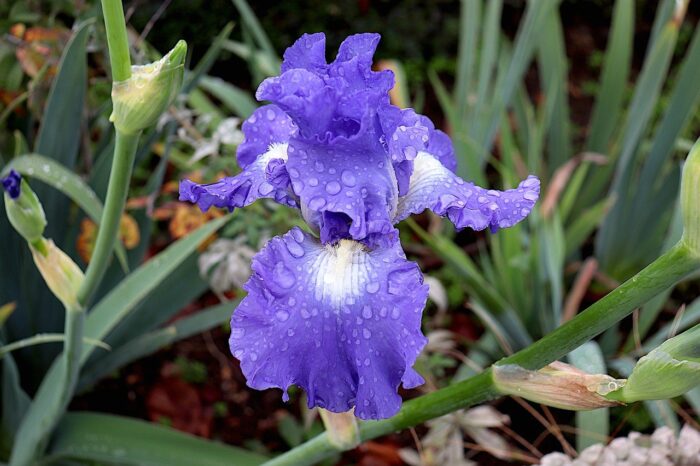
How to Plant Irises
Irises come in over 300 varieties and in almost every color except for bright red. Obviously, they can brighten most spots around your home if provided with enough sunlight.
They’re also a welcomed addition to many landscapes because they invite wanted visitors such as butterflies and hummingbirds. You can also use them to make gorgeous flower arrangements.
If you’re anxious to receive some of these benefits, you must know how to plant irises to ensure you give them every opportunity to succeed around your home.
To begin, plant irises during the last of summer. This time is appropriate because the temperatures are beginning to cool, but they only dip to around 50 degrees Fahrenheit. This allows the plants to become established before they must dig deep to survive the cold temperatures of winter.
When planting, pick an area with well-draining soil and adequate sunlight. Create holes that are about four inches deep and place 1 ½ feet between each plant. This will allow for good air flow around the plants.
Different varieties of irises grow to be different heights and widths. If you’re going with a smaller variety, you may be able to get away with planting them a little closer.
If you’re going with a larger variety, they may need to be planted further apart. The main thing to consider when planting is to ensure the rhizome of the plant is kept at soil level. It shouldn’t be planted beneath the soil.
By exposing the rhizome to the sun and ensuring proper spacing for adequate air flow, you’re doing your part to help keep it dry and avoid rot.
The final point to take note of is if you plant irises closer, you may need to transplant them more frequently. If you plant them further apart, than the recommended spacing, you may be able to prolong transplanting them.
How much time you have to dedicate to the long-term care of your iris flowers should be taken into consideration when deciding on their spacing during planting.
Finally, if you’d like to plant irises with flowers that require more water, you can. Iris flowers are drought-tolerant, but they can co-exist with those that are not.
You can accomplish this by planting your irises in mounds instead of in holes. Make sure the rhizome is kept at soil level at the top of the mound and exposed for sunlight and air flow.
This will allow the water to drain down the mound and away from the irises when watering the flowers around them that need the water for their survival.
By taking these tips into consideration, you should be able to plant your irises with ease and enjoy a lovely assortment of colors around your home.
Caring for Irises
Irises are a low-maintenance flower. There are a few things you can do to encourage good health and longevity in your garden.
These flowers should be fertilized two times per year. The first time is in early spring as they’re waking up from dormancy. You’ll want to fertilize them again after they’ve finished blooming.
This is a boost for their blooms the following year. A big thing to remember when fertilizing is to ensure you use a low-nitrogen fertilizer.
If you sprinkle compost or high-nitrogen fertilizer on your irises, it can encourage rot to occur. Avoid this by using the proper amount of nitrogen on your plants.
The next important tip when caring for irises is to ensure you don’t overwater. Irises are drought-tolerant and shouldn’t be watered aside from transplanting or during times of drought.
You should avoid mulching around irises as well. This will stop proper air flow around the rhizome and keep too much moisture around the base of plant causing rot.
When your irises are in bloom, be sure to deadhead them to encourage new growth. Once fall arrives, and blooming is complete, cut the foliage back to where it’s only a few inches tall. This will help the plant overwinter.
If the foliage of the plant receives frost bite, be sure to remove any damaged areas to avoid attracting pests.
The final necessary care items are dividing and discarding the seed pods. Iris flowers will form seed pods towards the end of the season.
If left alone, they’ll reseed and form even more irises. This will cause overcrowding and discourage proper airflow.
By discarding the seed pods, you’ll keep proper spacing in your flower bed and help your plants remain healthy.
Dividing your irises is something you must do every three to four years, depending upon spacing in your garden.
The “mother” rhizome will eventually stop producing and die off. When this happens, your irises will stop blooming.
By digging up the mother rhizome, and her offspring, it allows you to discard the original rhizome and transplant the offspring to form even more flowers and encourage further blooming.
If you practice these few maintenance techniques, it should help your iris flowers to bloom and lead healthy lives while in your garden.
Garden Pests and Diseases for Irises
Irises have quite a few threats they must contend with. By staying aware of what could harm them, you can help your flowers bloom vibrantly around your home.
The first pest you must be aware of is the iris borer. It’s a white worm which attaches to the rhizome of your flower.
It will bore into the flower causing damage to the foliage and rhizome. They frequently leave vertical markings within the foliage of the plant. If your plant is only lightly impacted by this pest, you can squeeze the leaves to kill any active borers.
However, if your plants are heavily infested, you’ll need to remove all impacted plants from the grow space and destroy them.
The other pests are common among a variety of plants. When growing irises, you should look for whiteflies, thrips, slugs, snails, and aphids.
Whiteflies and aphids should be blasted with a water hose to dislodge them from the plants. Follow up by treating your flowers with insecticidal soaps.
Thrips frequently cause plants to take on a silver glow due to the heavy feeding of this pest. They, too, can be treated with insecticidal soap, neem oil, or by pruning away damaged parts of the plant.
Slugs and snails can be treated by either handpicking them at dusk, when they come out to feed, or by placing diatomaceous earth around the base of the plants. This will form a deadly terrain for the pests to climb over as they move around the base of your plant.
There are only two basic diseases that frequently impact iris flowers. One is root rot caused by lack of airflow and too much water around the rhizome.
Plant where the flowers receive plenty of sunlight and have well-draining soil, and these issues should be easily avoided.
Leaf spot is the other disease which causes problems for the iris plant. It can come in a bacterial or fungal form. Either way, the foliage of your flowers will develop dark colored spots.
You can remove any damaged parts of the foliage and begin creating better airflow around the plant. If the infestation continues, or has flourished prior to your treatment, treat your irises with a fungicide for the fungal form of this disease.
Unfortunately, there are no accepted treatments for bacterial leaf spot. Therefore, preventing the disease from taking over your flowers is the best method of dealing with it.
By understanding what you’re up against when raising irises in your garden, you stand a better chance at having them thrive under your care.
Irises do a wonderful job at providing color around your home during the summer months. The icing on the cake is that they’re perennials. If you’d like to add a burst of color to your garden each year, try your hand at growing these amazing flowers.
More About Irises
https://extension.psu.edu/iris-diseases